Looking for open kitchen shelf decor ideas? These 21 styling tips will help you create shelves that look intentional, beautiful, and actually functional — not like a junk drawer on the wall.
Open shelves in a kitchen are one of those things that looks incredible in every design magazine and incredibly stressful in real life if you don’t know what you’re doing. Because the line between “beautifully styled open shelving” and “everything we own just sitting on a wall” is real and it’s thin and most people fall on the wrong side of it without meaning to.
The secret (if there is one) is restraint. Open shelves work when there’s breathing room. When everything on them was chosen intentionally. When the things that are purely functional have been decanted into something prettier, and the things that are just sitting there waiting to be used have been edited out. You don’t need fewer things. You need fewer things on display.
These 21 ideas will show you exactly how to style open kitchen shelves in a way that looks like it was done by someone who actually knows what they’re doing — because after this, you will.
This post may contain affiliate links, which means I’ll receive a commission if you purchase through my link, at no extra cost to you.
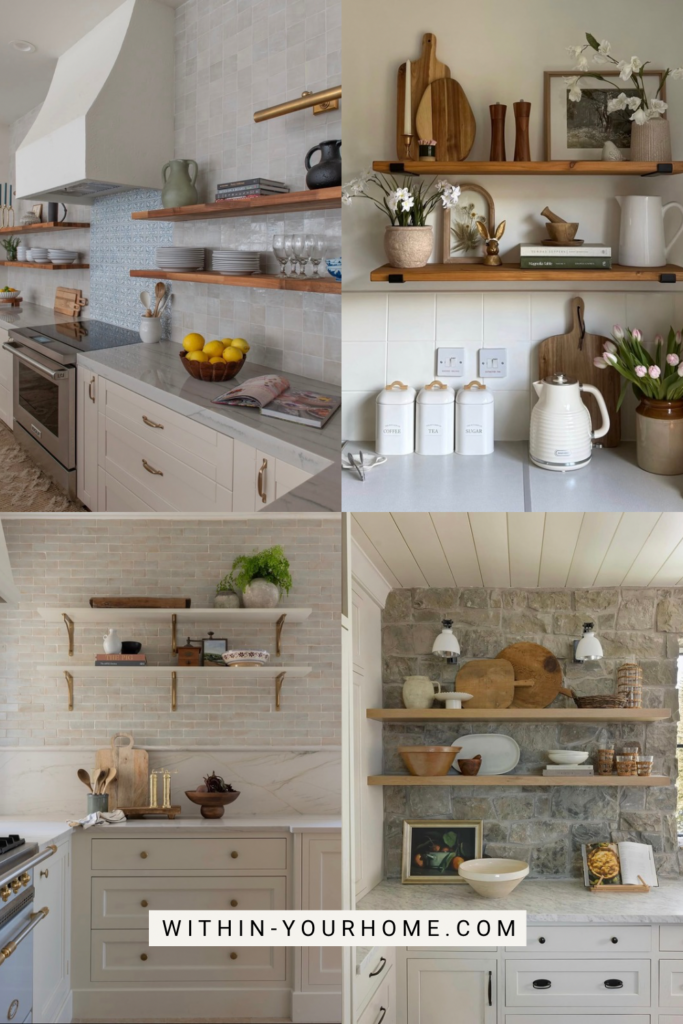
How to Style Open Kitchen Shelves
1. Group by Category and Color
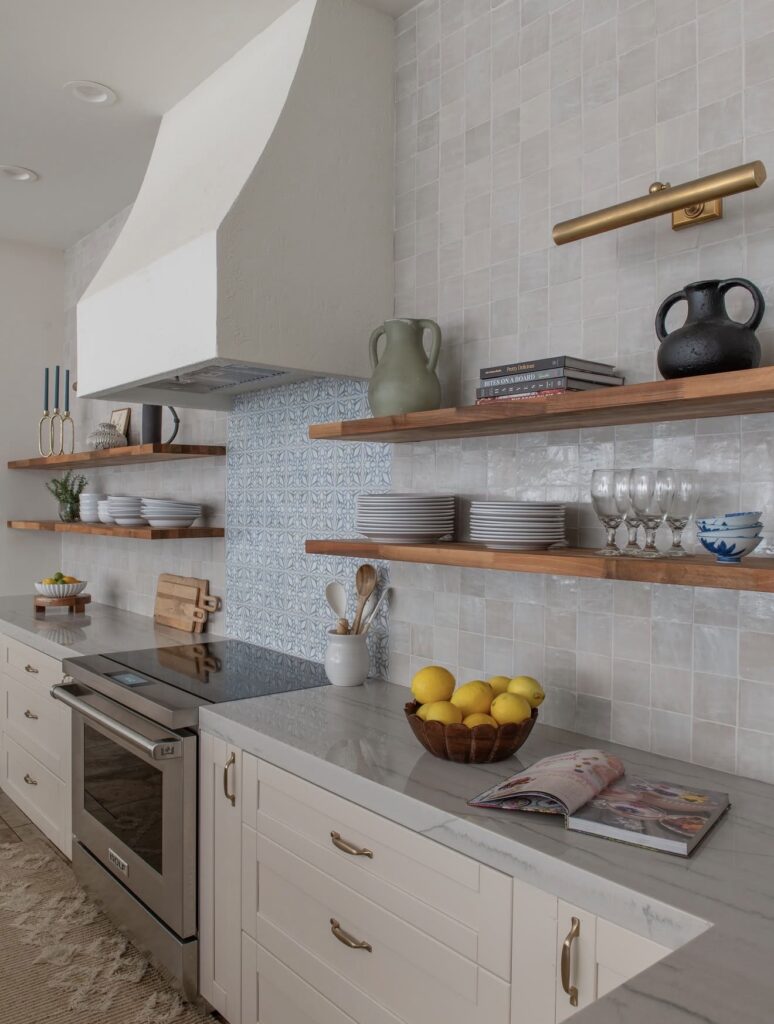
Dishes together. Glasses together. Cookbooks together. When like things live together and the colors within each grouping are cohesive, shelves go from chaotic to calm without you having to do much else. The categories create a visual logic that makes the eye happy.
2. Use the Rule of Three
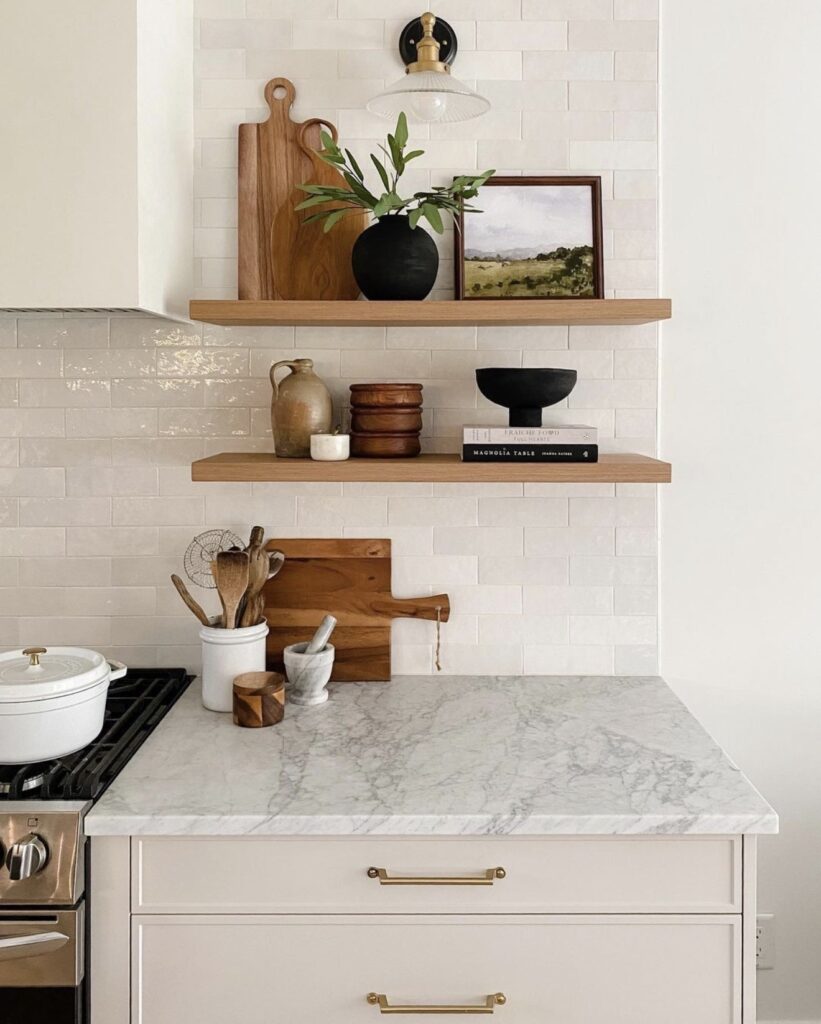
Group objects in threes — a tall, a medium, a small. A plant, a vase, a small ceramic bowl. Three cookbooks, a candle on top, a small plant beside. Odd numbers look naturally balanced in a way that even numbers don’t and it applies to every shelf in every kitchen.
3. Leave Some Negative Space
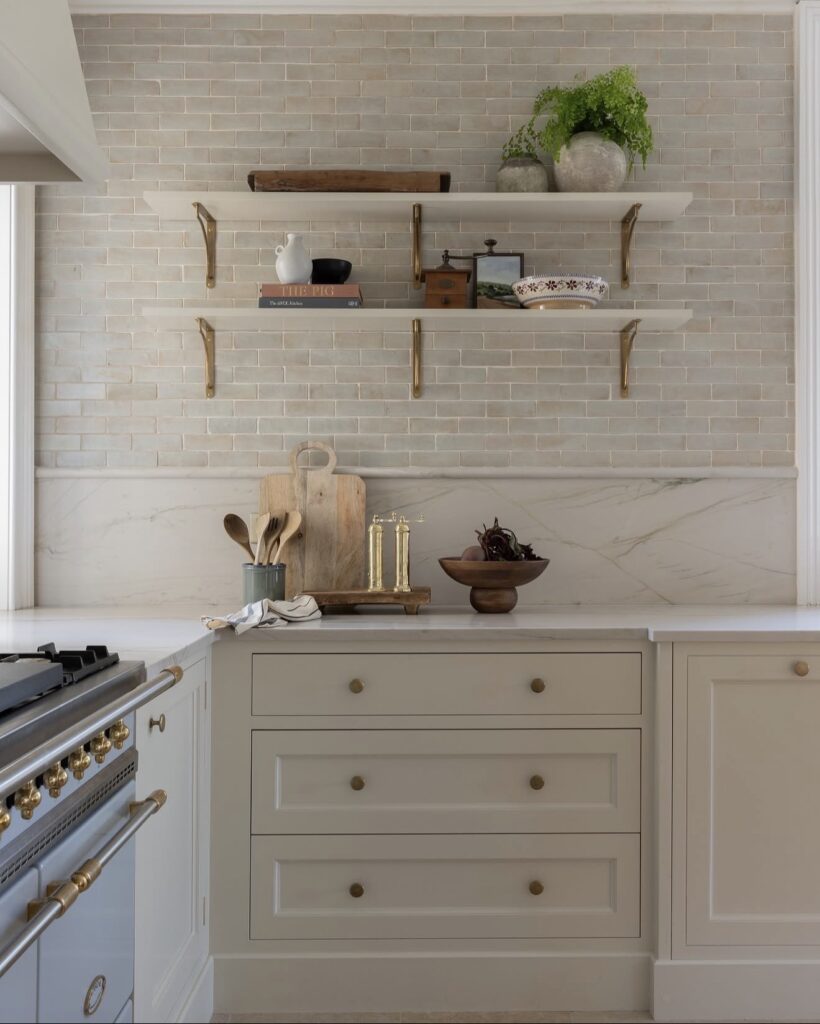
This is the one most people resist the most and the one that makes the biggest difference. Empty shelf space isn’t wasted space — it’s breathing room that makes everything around it look more intentional. If every inch of your shelves is full, the first thing to do is take some things off.
4. Stack Plates Vertically Instead of Horizontally
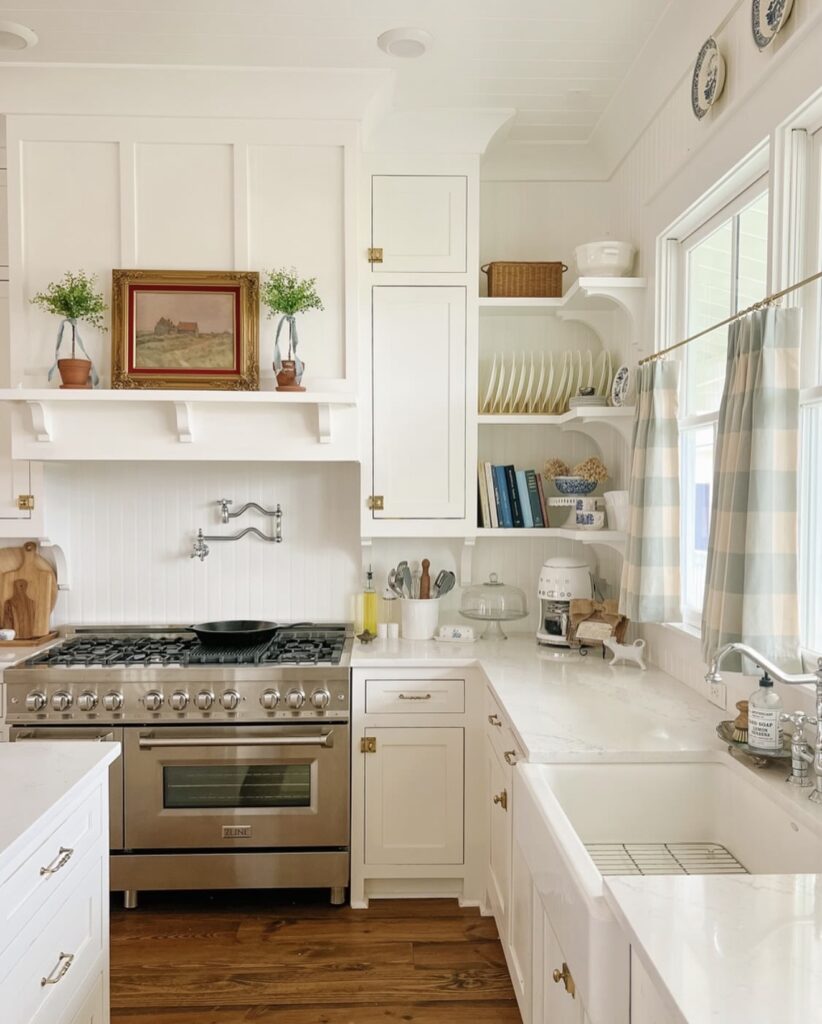
Plates stored in a vertical plate rack or leaned against the back wall of the shelf rather than stacked horizontally take up less visual space and look more intentional. They also make it easier to grab a single plate without moving the whole stack.
5. A Cohesive Dish Set in One Color Family
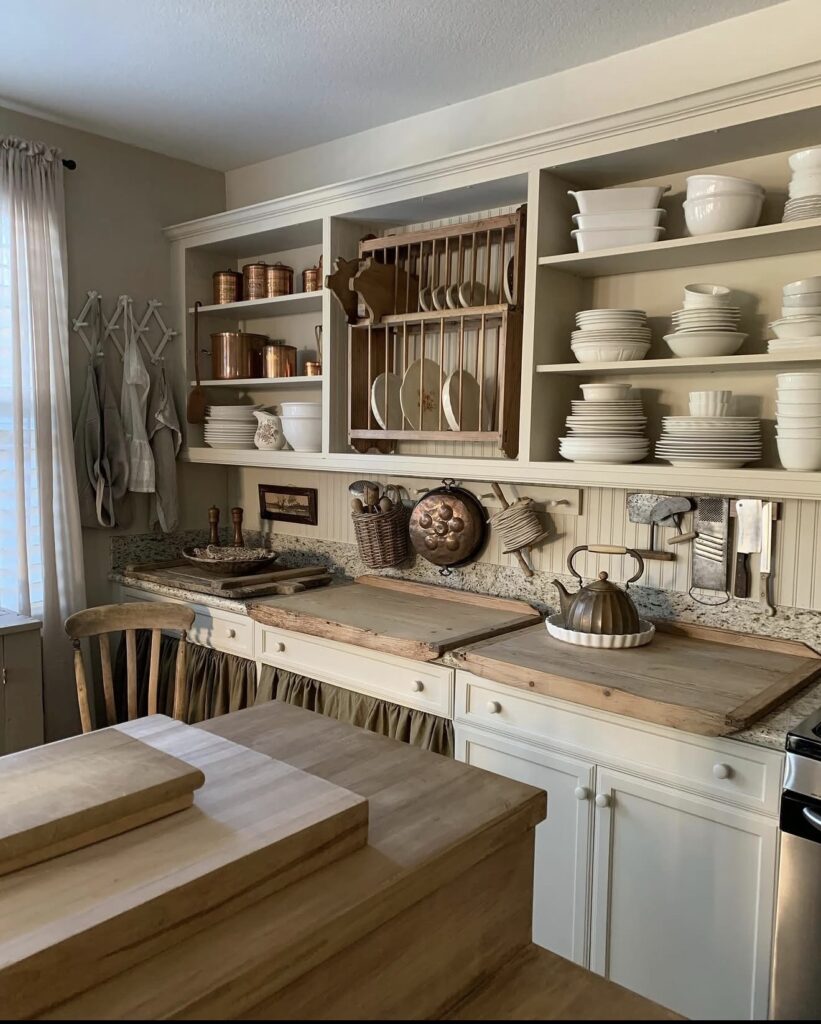
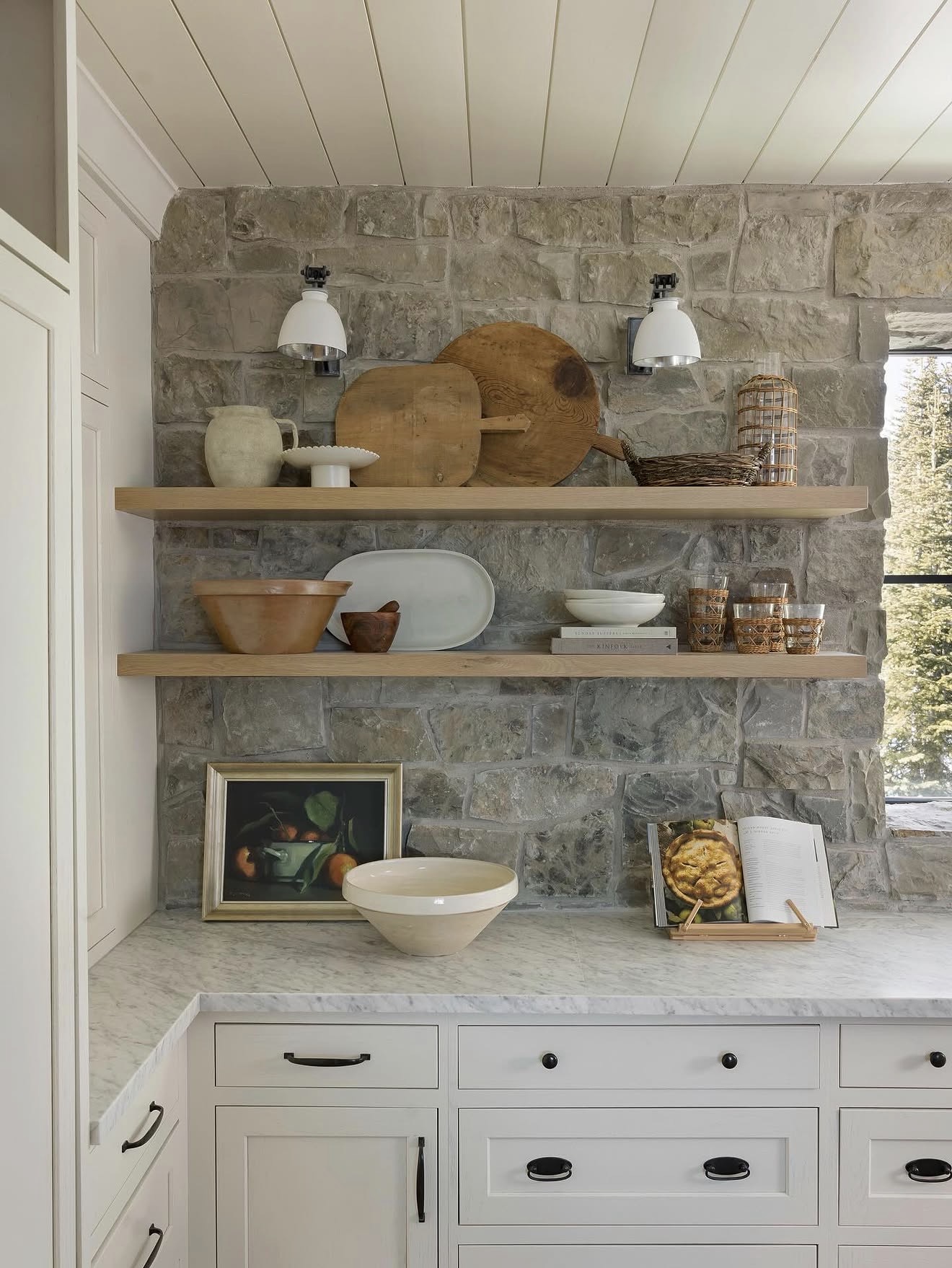
A full set of white dishes, or all earthy stoneware, or all the same brand in coordinating tones — a cohesive dish collection looks purposeful on open shelves in a way that a mix of everything you’ve accumulated since college does not. If you’ve been thinking about investing in a good dish set, open shelves are the reason to finally do it.
6. Glass Canisters and Jars for Dry Goods
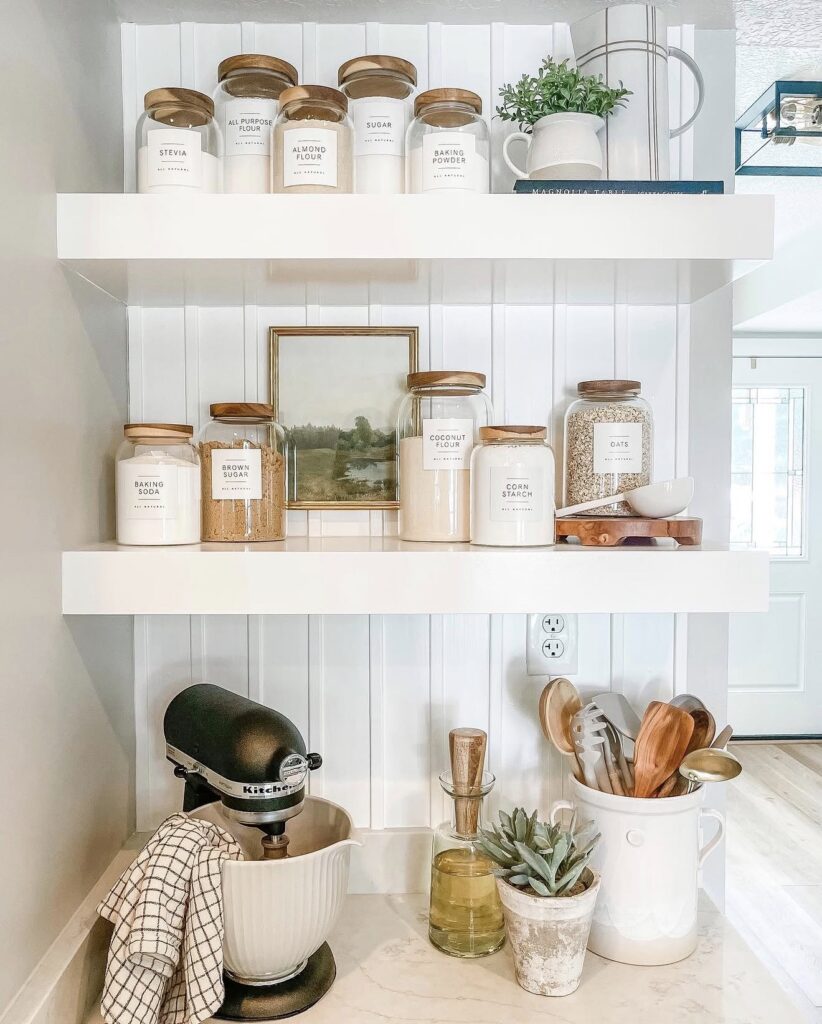
Pasta, rice, flour, sugar, coffee — decanted into matching glass canisters or mason jars and lined up on the shelf. They look beautiful, they make it easy to see what you’re running low on, and they immediately make your kitchen look like someone with good taste lives there.
7. Glassware Arranged by Height
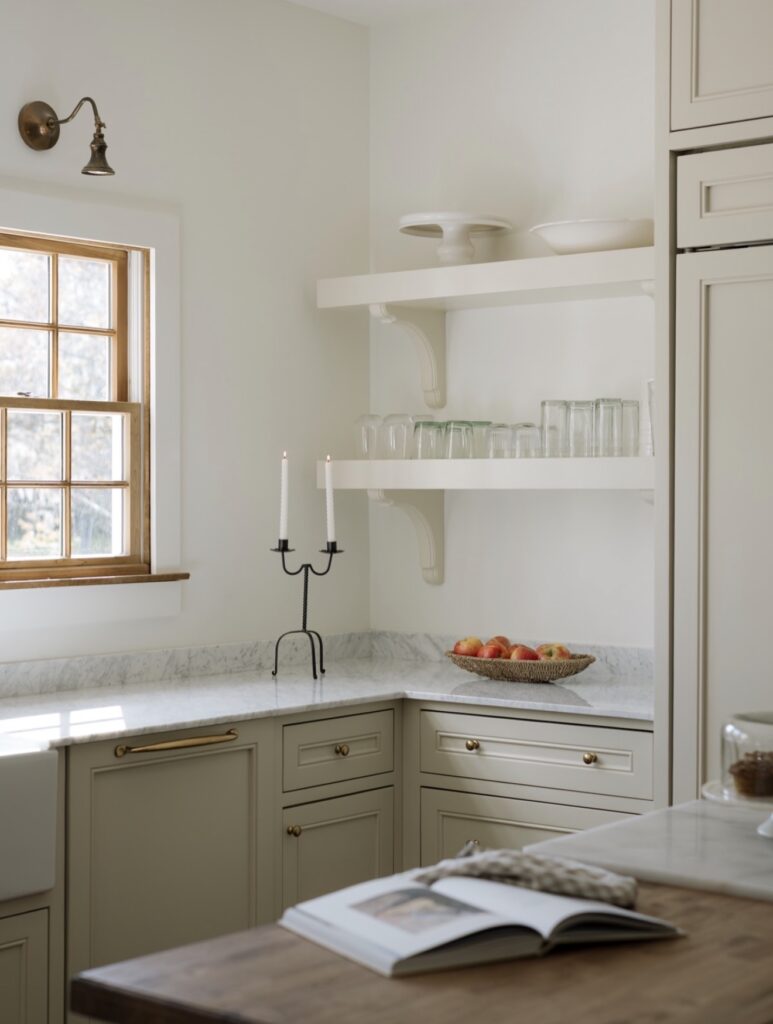
Water glasses in the front, taller glasses behind, wine glasses on their own section of the shelf — arranging glassware by height rather than randomly creates a clean, orderly display that looks considered rather than crammed.
8. A Plant on Every Shelf
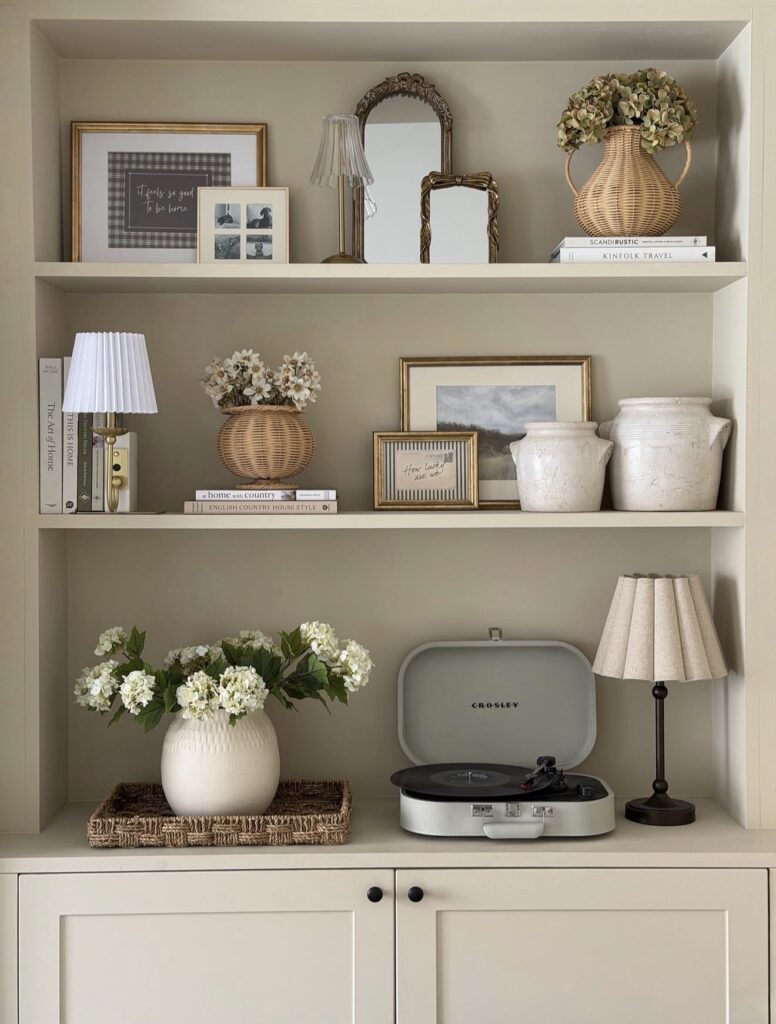
Or at least most of them. A small trailing pothos, a little herb plant, a succulent in a pretty pot — something living on each shelf level adds warmth and organic life that no amount of styling with objects alone can replicate. The green also provides a visual break between groupings that makes the whole shelf breathe.
9. Cookbooks With Beautiful Covers
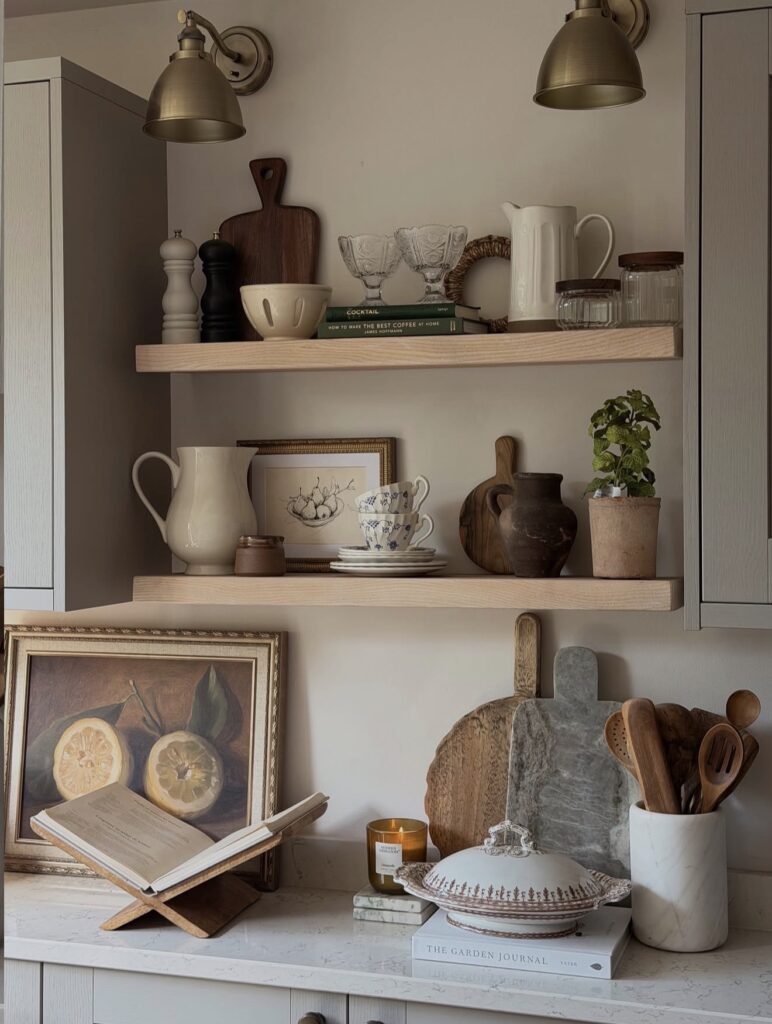
Face them out rather than spine-out when the cover is worth seeing. Stack a few horizontally and lean one vertically against the wall. Mix them in with other objects rather than keeping them all in one block. Cookbooks on open kitchen shelves are both functional and genuinely decorative when they’re the right books.
10. A Small Piece of Art or a Framed Print
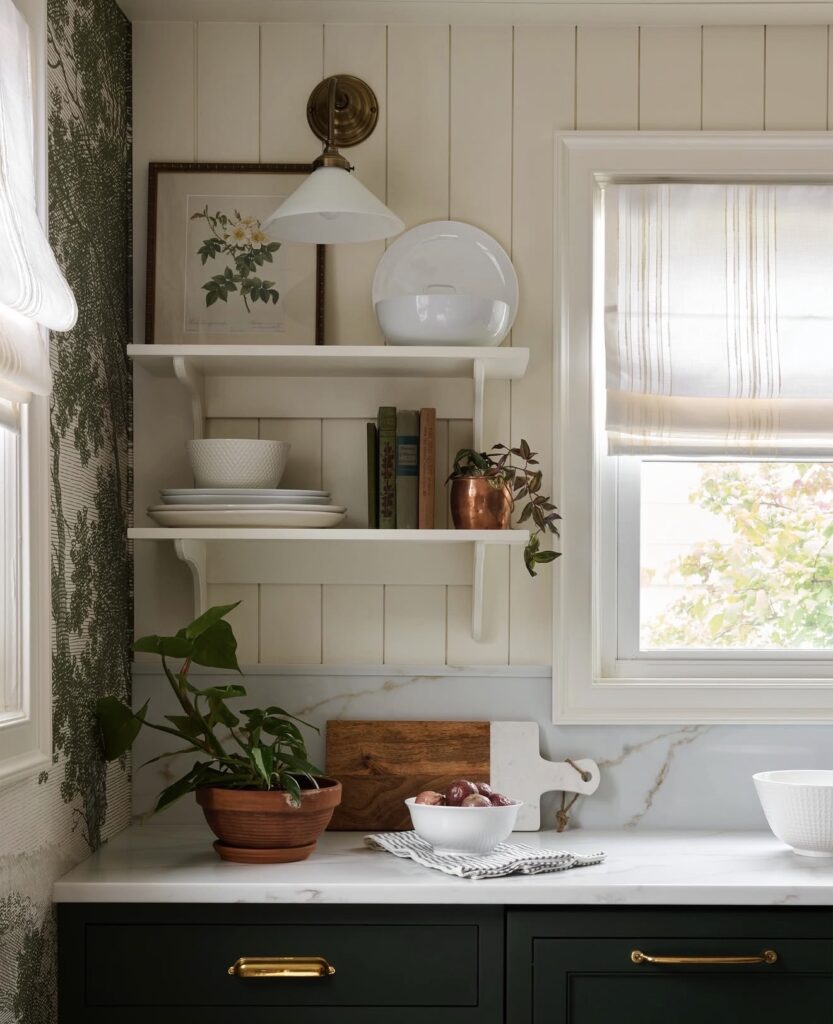
Leaned against the back of the shelf or mounted on the wall between shelf levels — a small botanical print, a simple illustration, a little painting — adds a layer of personality to kitchen shelves that dishes and plants alone can’t quite achieve.
11. Woven Baskets for Hidden Storage
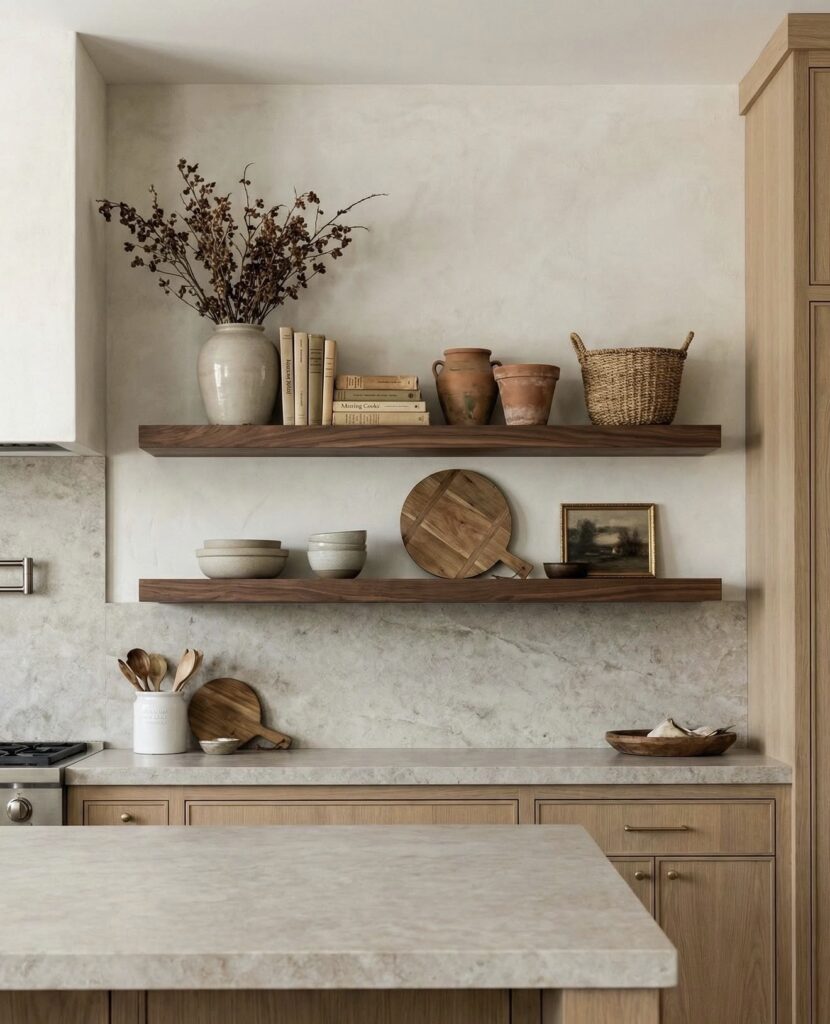
A woven basket or two on the lower shelves that holds things you need access to but don’t want on display — snack packets, an extra sponge, a phone charger, whatever. Baskets are the open shelf hack that makes the whole system more functional without sacrificing the look.
12. Fresh or Dried Botanicals in Simple Vases
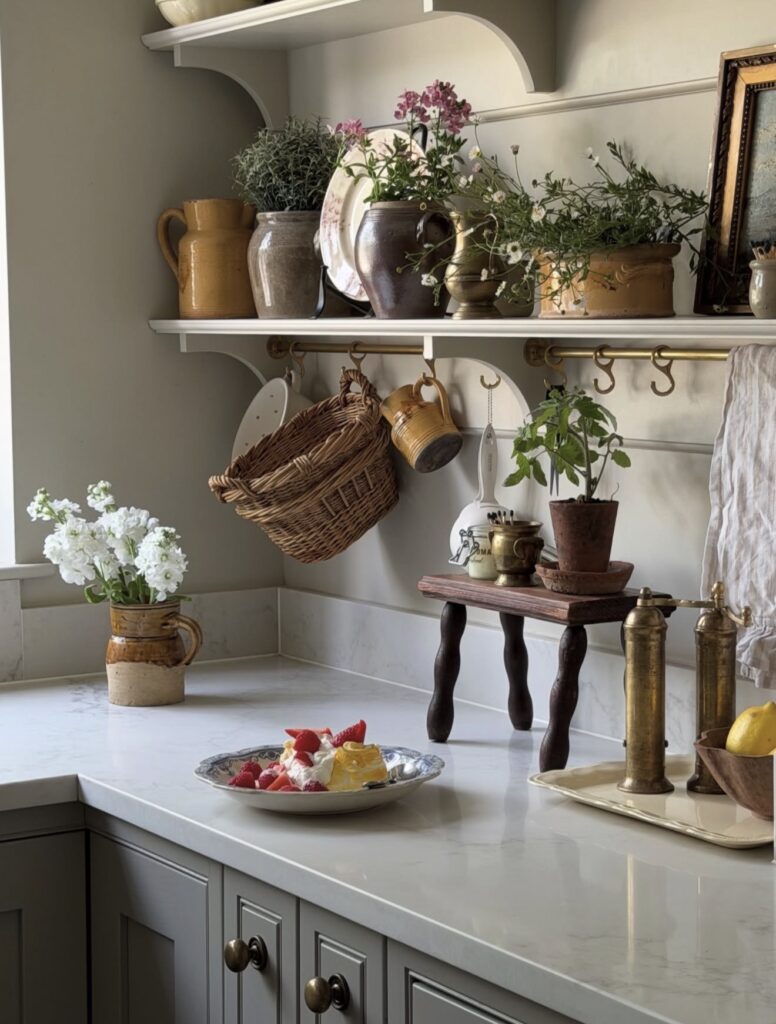
A few stems of eucalyptus in a bud vase. A bundle of dried lavender leaned against the back of the shelf. A small bunch of fresh herbs in a glass of water. These details add color and texture and a sense of life to shelves that might otherwise feel static.
13. A Collection of Ceramics or Pottery
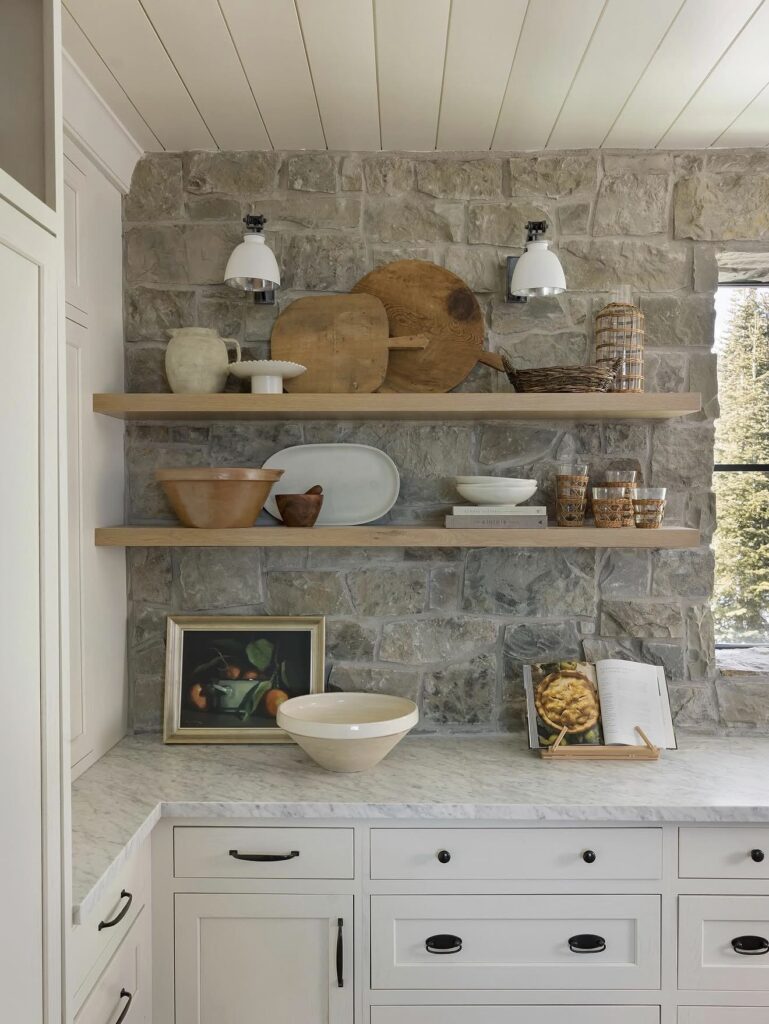
Handmade bowls, interesting pitchers, a beautiful serving piece you love — a collection of ceramics on open kitchen shelves looks collected and personal and adds texture in a way that machine-made objects don’t. Even a few pieces mixed in with your everyday dishes changes the whole feeling of the shelf.
14. Vary the Heights Within Each Shelf
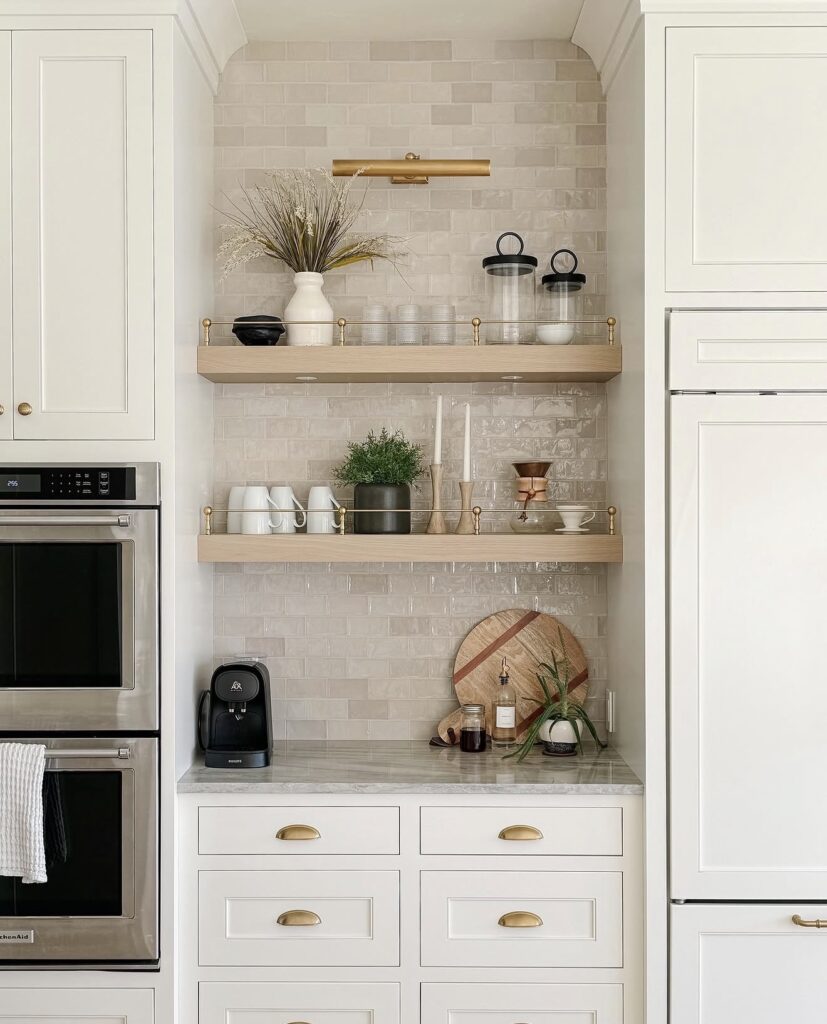
A tall candlestick beside a low bowl beside a medium vase. A stack of books with something on top versus a single object beside it. Height variation within each shelf level creates visual movement and depth that everything- at-the-same-height simply doesn’t have.
15. The Back of the Shelf Is Part of the Design
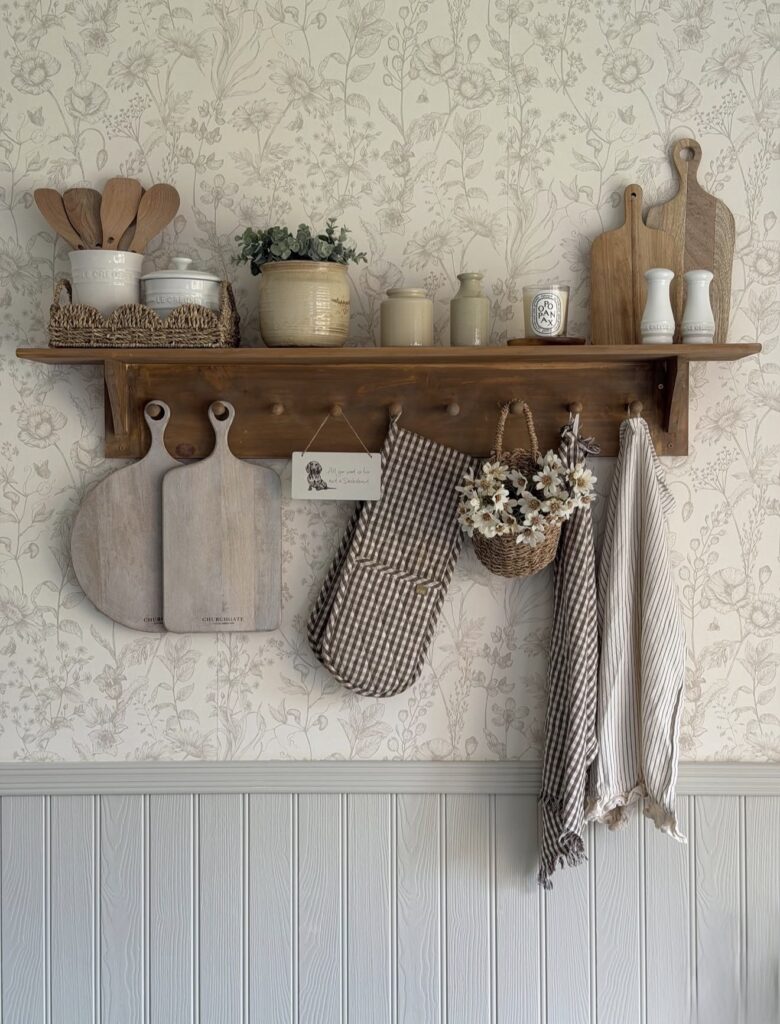
Paint it a contrasting color, add wallpaper, install shiplap — whatever works in your kitchen. A shelf with an interesting back wall makes everything displayed in front of it look more intentional and more beautiful. It’s the detail that separates styled shelves from shelves that just have things on them.
16. Repeat a Color or Material Throughout
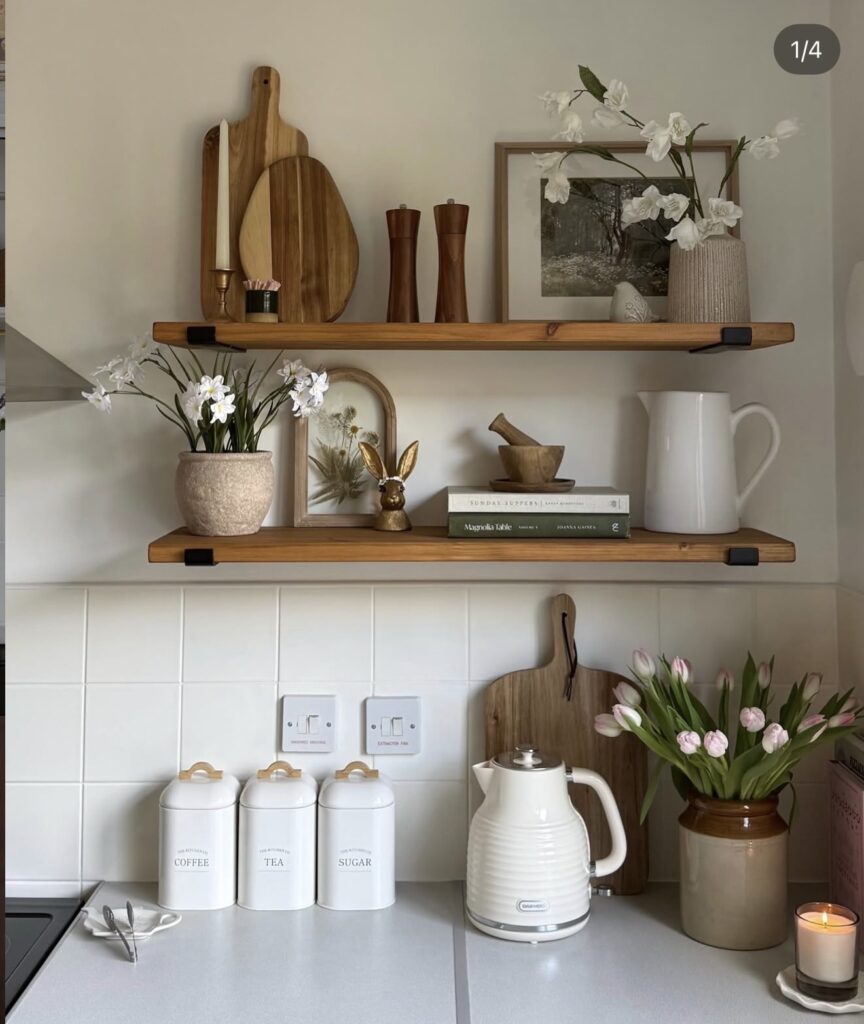
A warm wood tone that appears in the cutting board on one shelf and the wooden bowl on another and the wooden-handled utensils on the third. A warm white that runs through the dishes and the candles and the ceramic planter. Repetition creates cohesion and cohesion makes shelves look designed.
17. Style in Sections Rather Than Across the Whole Shelf
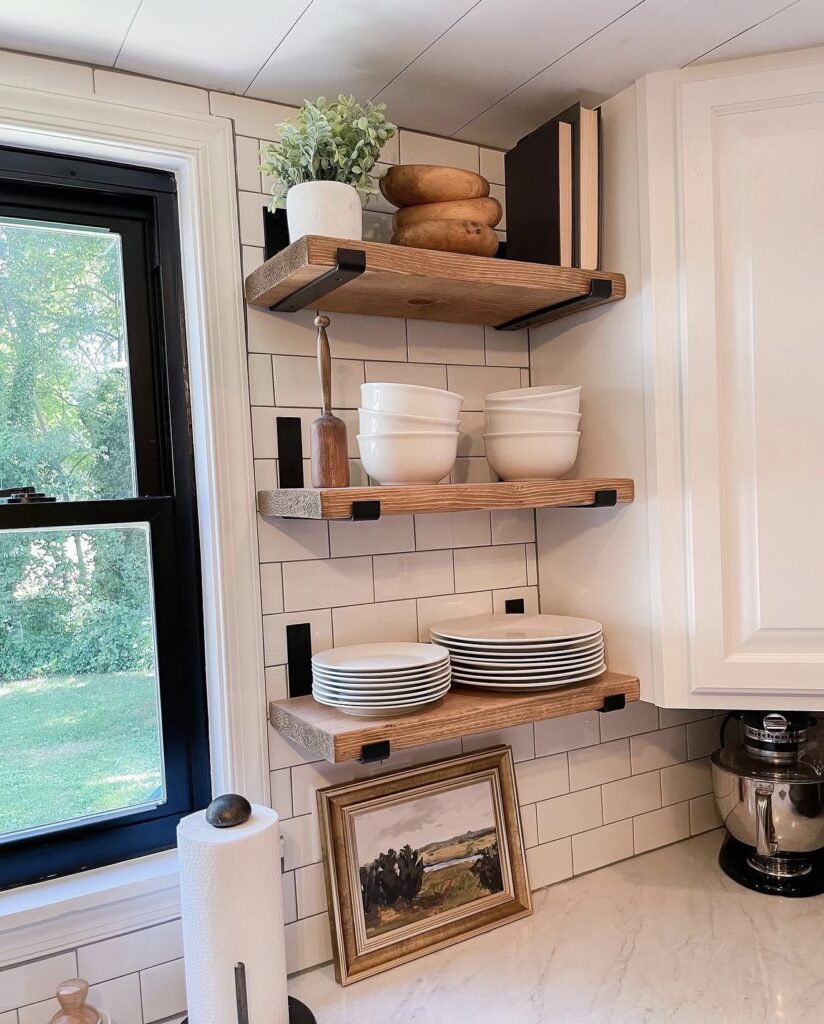
Think of each shelf as having a few distinct sections — a dish section, a plant section, a decorative section — rather than mixing everything together evenly across the whole length. Sectioned shelves look more organized and more intentional than evenly distributed ones.
18. The Neutral and Organic Look
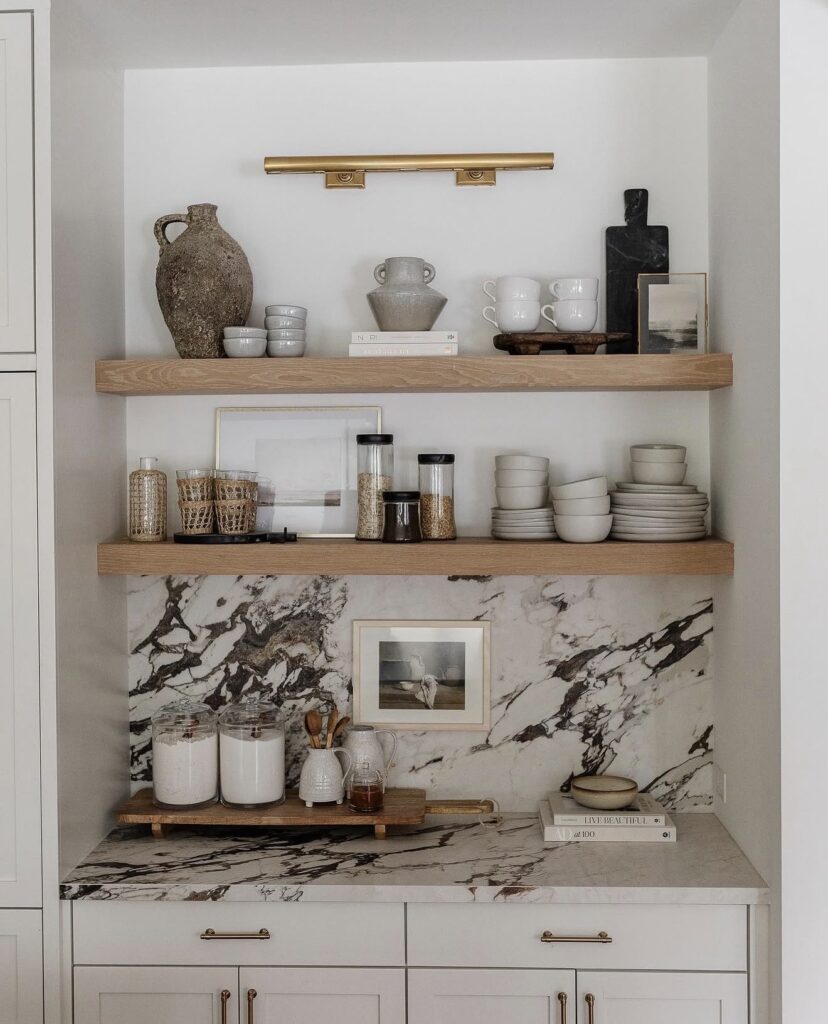
Warm white dishes, natural wood, stoneware in earthy tones, a trailing plant, dried botanicals, a linen dish towel folded neatly at the end of one shelf. This is the open shelf version of an organic modern kitchen and it is specifically beautiful.
19. The Cottage or Farmhouse Shelves
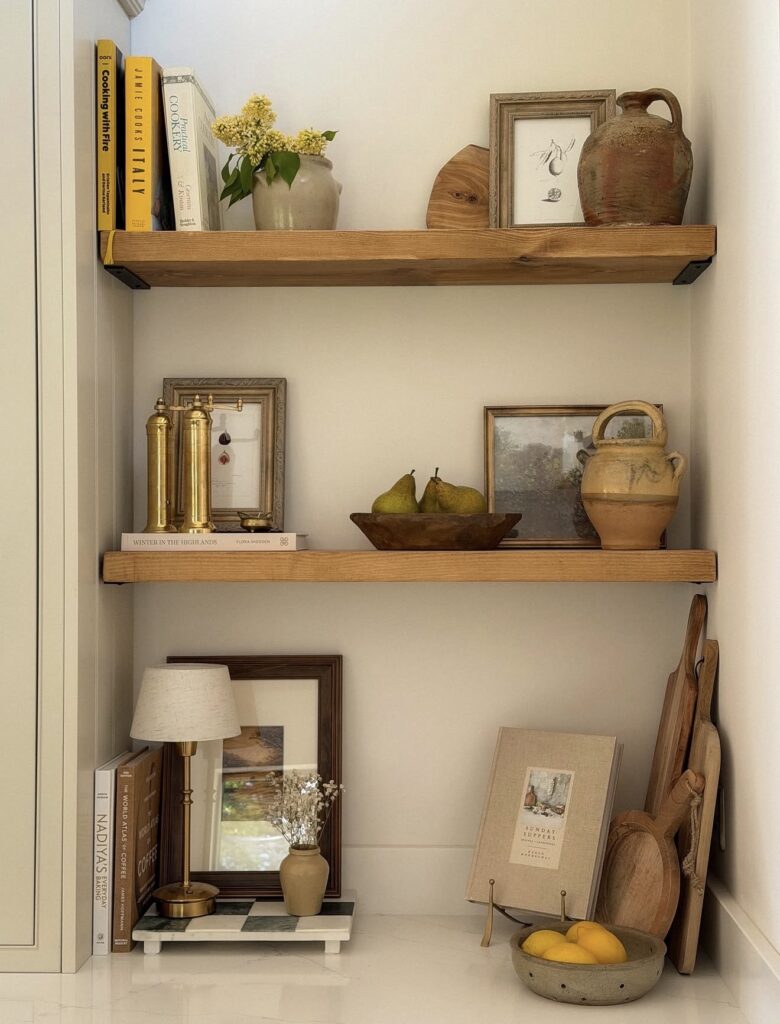
Open shelves painted white or in a soft sage, filled with white ironstone, mason jars, a cast iron piece displayed as decor, fresh herbs in little pots, a vintage find tucked in here and there. Warm and charming and the kind of kitchen that makes people want to stay and talk while you cook.
20. The Modern and Minimal Shelves
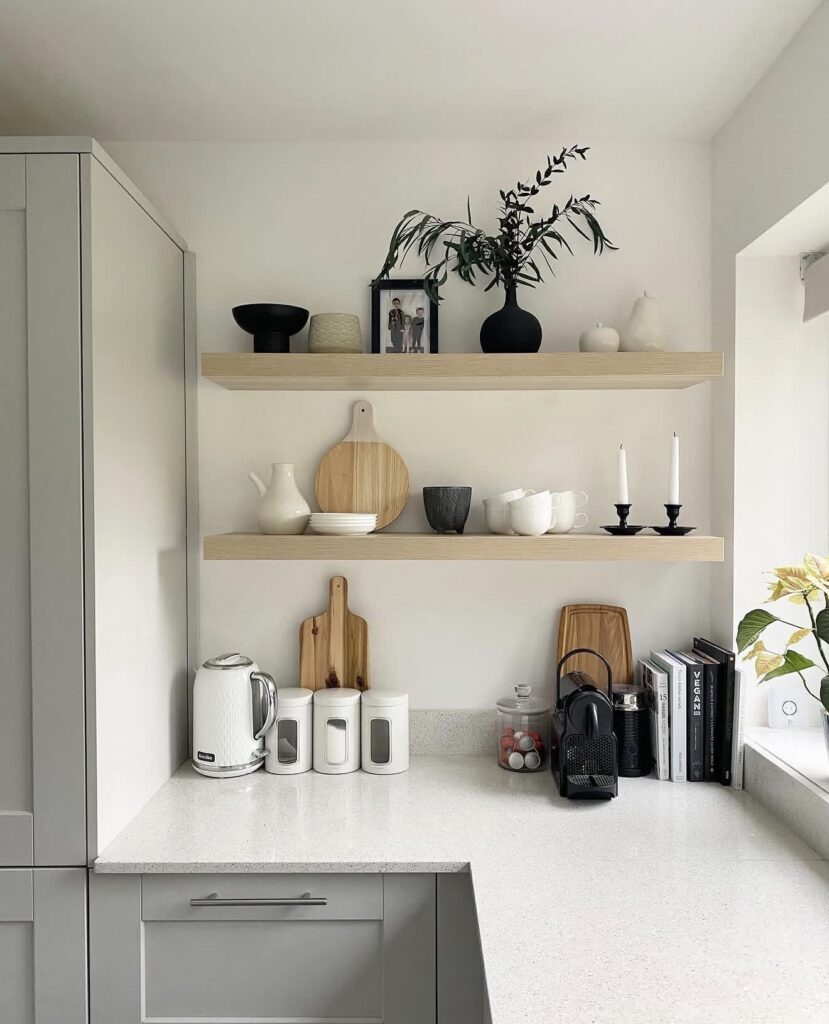
Black or dark metal shelf brackets, white walls, a limited number of objects in a very restrained palette — white dishes, clear glass, one plant, one or two objects with interesting shapes. Nothing extra. Everything intentional. The version for the person whose kitchen is clean-lined and whose shelves should match.
21. The Eclectic Collected Shelves
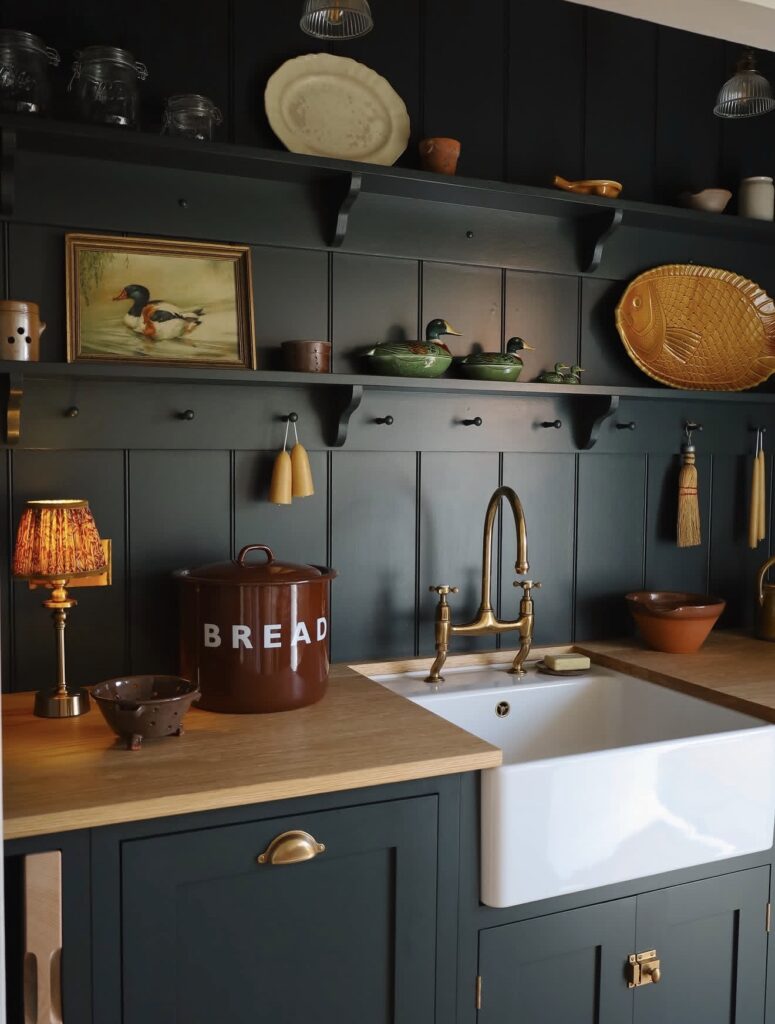
A mix of everything you love — travel finds, mismatched ceramics, a colorful cookbook, a small sculpture, a plant in an interesting pot, a
beautiful bottle of olive oil displayed rather than hidden. The eclectic shelf works when there’s a color thread running through all of it even when the objects themselves are varied. Pick your thread and let everything else be more free.
Open kitchen shelves are genuinely one of the most satisfying styling projects in a home because the results are immediate and you can change them whenever you feel like it. Move something, add a plant, take three things off, the shelf transforms and so does the kitchen.
The main thing to remember is that less is almost always more. Start with less than you think you need on the shelf. You can always add back. You almost never have to.